Start with readiness
A placement check helps identify skills to revisit. Catch-up routes support a starting point based on understanding rather than a calendar alone.
Every day. All the learning.
Online, print & multimedia. First through Sixth Grade.
Our approach
A clear sequence matters. So does knowing when to slow down, revisit a skill, or offer a new challenge. Our program structure brings those decisions into the daily rhythm of teaching.
Online
no cost, no registration
Lessons, printable PDFs, assessments, and answer keys are all included. Nothing to sign up for.
Printed workbooks
optional
An optional companion to the program, never required to use or access the fully online curriculum.
Parent guides & daily slides
optional support
Teaching guidance and multimedia lesson support to use alongside the curriculum, never required.
A placement check helps identify skills to revisit. Catch-up routes support a starting point based on understanding rather than a calendar alone.
Units connect prerequisite skills to new learning. Each lesson has an “I can…” objective, standards references, materials, timed activities, and a “Watch for / Try” note.
Worked examples support guided practice before independent work. In mathematics, concrete materials and visual representations help connect actions to symbols.
Daily “Remember?” prompts revisit prior learning. Weekly passages connect literacy with science and social studies rather than treating knowledge as isolated subjects.
Weekly checks, unit assessments, answer keys, and scoring guides help educators choose a next step. Records capture progress, not just pages completed.
Research-informed, honestly described
Spaced retrieval practice, systematic phonics, and connections between reading and subject knowledge are supported by published research. This does not mean the full curriculum has been proven effective in a controlled study.
Ophuis-Cox, Catrysse & Camp (2023)
Retrieval practice and second-grade arithmetic learning.
Ehri (2020)
The role of systematic phonics in learning to read words.
Cabell & Hwang (2020)
Building knowledge to support reading comprehension.
Use shared objectives and consistent practice to plan instruction. Checks and teaching notes support small-group review and follow-up.
A common sequence supports planning across families while allowing pace and review decisions to reflect each learner.
Use placement checks and grade priorities to identify a starting point, then connect targeted practice to a broader progression.
Materials & support
Practice pages, teaching guidance, assessments, and records are designed to work together. Educators can move from planning to instruction to follow-up without piecing together an unrelated collection of resources.
Worked examples, answer spaces, a challenge, and answer keys turn each lesson into something a learner can do—not just read.
The teaching sequence is supported by objectives, materials, timed activities, and practical notes on what to notice and what to try next.
Checks make learning visible. Scoring guidance and next-step routes support decisions about review, pacing, and readiness.
Connections beyond the lesson help families and organizations extend learning without replacing the core curriculum.
Print & digital
All online content and materials, including dedicated worksheet and test PDFs, assessments, and answer keys, are open to everyone at no cost, without registration. Supplemental printed books, parent guides, and daily lesson slides are optional supports. Online, print, and multimedia work together to make homeschool accessible to every family.
The printed series and the online curriculum draw from the same source content.
See the Books page for titles and, where they are live, Amazon links.
Read together. Perform together.
About us
Lesson Plans, by Young Learners, brings online, print, and multimedia together for First through Sixth Grade. Every day, every core class, and every lesson is mapped out, with all online materials open to everyone and optional companions to support your family.
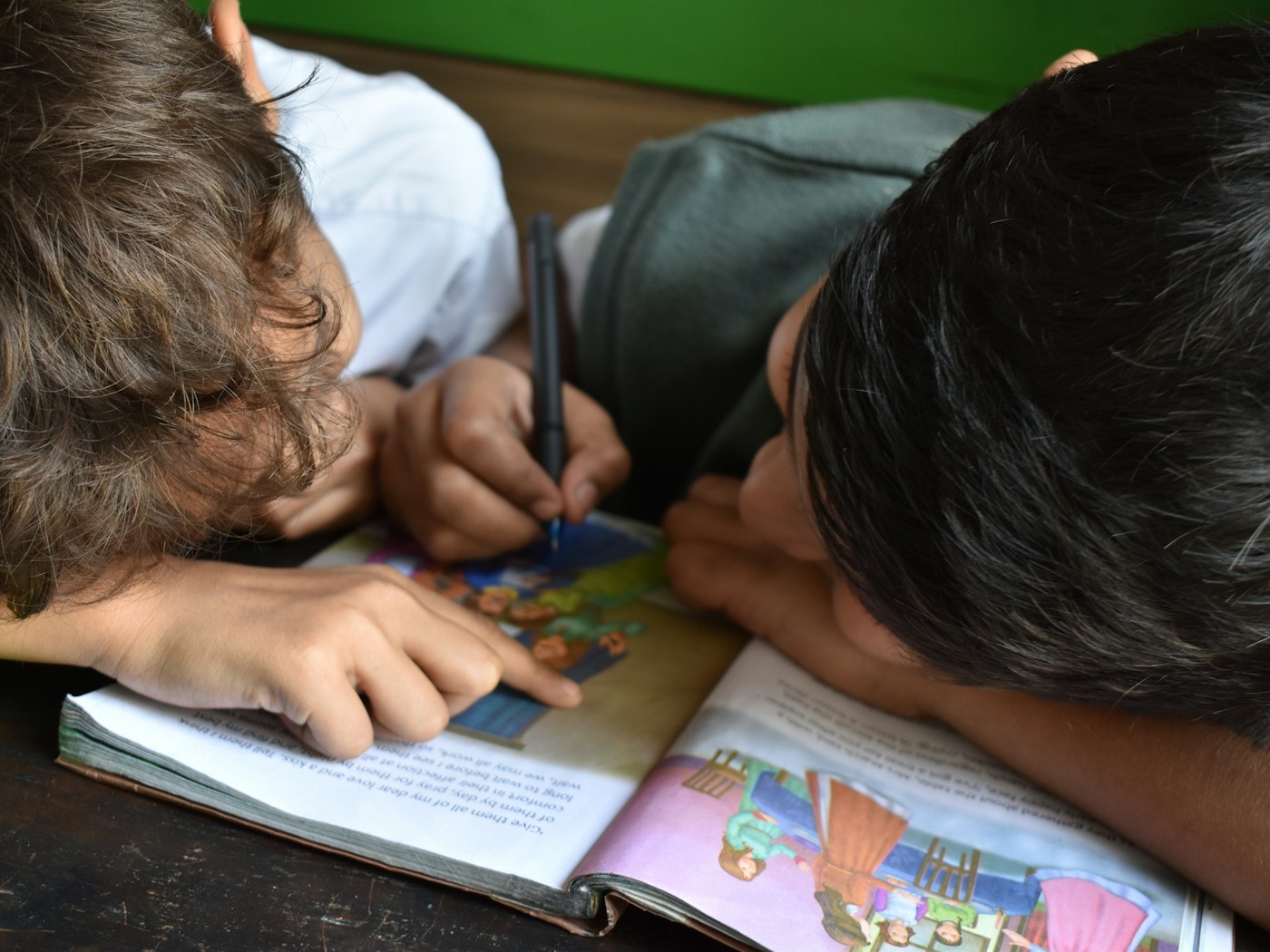
Busy mornings, siblings at the table, a child who needs one more example. Lessons are short, the steps are plain, and answers are always included, so you never have to guess.
Teaching a group or running a co-op? Each grade has its own site with teacher guides, assessments, and records for educators and homeschool organizations:
Questions? hello@younglearners.io · Getting started guide
First through Sixth Grade